Sunday, November 11, 2018

Understanding Common Post-Stroke Medications


www.strokecamp.org


http://www.unitedstrokealliance.org/


United Stroke Alliance in partnership with Medtronic is launching a new resource for Stroke Support Groups called The Booster Box. Included in the box is everything a leader needs to conduct a support group meeting for up to 24 attendees.

To receive your free Booster Box please call our office at 
309-688-5450 or email info@strokecamp.org to request yours. 

Subscriptions will be available for purchase and information will be inside your free box.  

Show Me The Booster Box
*****************************************************************
*****************************************************************
Understanding Common Post-Stroke Medications
BY JON CASWELL

http://strokeconnection.strokeassociation.org


Most stroke survivors leave the hospital or rehab with at least one, sometimes several, medications they may not have been taking before. This may be quite a surprise for some patients — especially if stroke isn’t the only new diagnosis they received. “If the stroke is the result of undiagnosed diabetes or high blood pressure, they may not have been on any medications before, and they may leave the hospital with multiple prescriptions,” said physiatrist Lynn Vidakovic of the Shirley Ryan AbilityLab in Chicago.

Following the healthcare team’s recommendations and taking medicines as prescribed is key to keeping your risk of another stroke or heart attack as low as possible. It may take some getting used to, especially if you haven’t been on medication before. Never quit taking a prescribed medicine without talking with your healthcare provider first. There are many ways they can work with you if you’re having any kinds of difficulties with any of your medicines.

Understanding the purpose, potential side effects and risks of not taking your medicines as directed is important, whether they’re prescribed or over the counter. Let’s look at some of the most common medication therapies recommended following an ischemic stroke.

“Blood Thinners” aka Antiplatelets & Anticoagulants

Roughly 87 percent of strokes are due to some sort of blocked artery, and as a result, survivors will often need an antiplatelet or anticoagulant.

When we get a cut or scrape that bleeds, the platelets in our blood release a chemical that signals other platelets to come and form a blood clot, closing the wound with a scab. Antiplatelets work to limit the release of that chemical signal, preventing platelets from coming together and clotting as easily. This is why antiplatelets such as aspirin, clopidogrel, dipyridamole and ticlopidine, allow blood to flow more easily.

Depending on the patient and what caused their ischemic stroke, aspirin or other antiplatelets may be recommended on their own or in combination to help prevent clots from forming in the blood vessels and causing another stroke. Your healthcare provider determines the right dose and combination of medicines for you based on several considerations, including your risk factors profile.

While antiplatelet therapy has many potential benefits, it is not right for everyone. For example, people with a history of liver or kidney disease, gastrointestinal disease or peptic ulcers, high blood pressure, bleeding disorders or asthma may not be able to take aspirin or may require special doses.

When a stroke is cardioembolic (caused by a clot formed in the heart that then travels to the brain) due to atrial fibrillation — a condition that increases the risk of stroke five-fold –, heart valve or other problems, it’s likely an anticoagulant will be prescribed. Anticoagulants do not dissolve clots but may prevent existing clots from getting bigger and causing more serious problems, such as a second stroke.

Older anticoagulant drugs are heparin and warfarin. These older anticoagulants interfere with the production of clotting factors made in the liver. That means they must be monitored regularly through blood tests for their impact on the liver. The goal is to make blood clot less, not to prevent clotting completely.

Physiatrist Lynn Vidakovic
Warfarin also requires regular blood tests to ensure the correct dose. Too little increases the risk of stroke and heart attack, but too much puts someone at risk for bleeding. Generic brands may be a different strength than the one prescribed by your doctor. Speak to your doctor first if you are considering using a generic if not prescribed initially to make sure the drugs are equivalent.

Also, warfarin users must be careful with their diet and avoid Vitamin K, which is found in cabbage, cauliflower, spinach and other leafy green vegetables. Warfarin slows clot formation by competing with Vitamin K, so having too much of it makes the medicine less effective.

Newer FDA-approved anticoagulants — sometimes referred to as novel oral anticoagulants (NOACs) or direct-acting oral anticoagulants (DOACs) — are rivaroxaban, apixaban, edoxaban and dabigatran. The newer anticoagulants are simpler to use because they don’t require frequent blood tests and some of them have a lower risk of major bleeding as well.

Occasionally some survivors may be told to combine antiplatelet and anticoagulant therapy, depending on their health profile and risk factors. But this is unusual and, if you are on both, you should ask your healthcare provider why. All strokes and survivors are unique, so secondary prevention must be tailored to each survivor.

Statins

Many ischemic strokes are due to the narrowing of blood vessels to, or in, the brain brought on by plaque buildup. This buildup is known as atherosclerosis (“hardening of the arteries”) and high levels of cholesterol in the blood may contribute to its development.

Statins work in the liver to keep cholesterol from forming. Several medications lower cholesterol levels, but statins are recommended for most patients because they’re also known to significantly reduce the risk of a heart attack or stroke. “There are other benefits of taking them beyond lowering the cholesterol. For instance, they can also be anti inflammatory,” Vidakovic said.

Another advantage to statins is that they are well tolerated, with few side effects. “It’s important to check your liver function and, in a very small percentage of people, they can cause myopathy, but the benefit of reducing your risk of stroke by lowering your cholesterol, specifically your LDL, is large,” she said.

Your doctor may consider other medications, too, especially if statins cause serious side effects or they don’t help you enough.

Depression medications

Depression has been reported in as many as 33 percent of stroke survivors, but we currently don’t have reliable estimates for how often depression happens with stroke. What we do know is that when stroke survivors experience depression, it can be an obstacle to their participation in their own recovery.

“There are neurochemical changes that can happen after stroke that cause depression,” Vidakovic said. “Some patients are going to have depression and if we treat that depression, those patients have a better functional outcome.”

One study of fluoxetine, a selective serotonin reuptake inhibitor (SSRI) for depression, demonstrated that it was also helpful for motor recovery. There have been several small studies of SSRIs that suggest this benefit, but larger, well-controlled trials are needed to confirm the validity of the findings. When Vidakovic prescribes it for motor recovery, it is typically no longer than 90 days.

Blood pressure medications

High blood pressure (HBP) is a risk factor for recurrent stroke and other cardiovascular conditions. There are many types of HBP medicines that work in different ways to reduce BP. It may take more than one and several dosage adjustments before blood pressure is under control.

“Since we typically don’t feel our blood pressure, it’s very important to monitor your blood pressure at home,” Vidakovic said. “And take your blood pressure medications consistently. It’s important for patients to talk to their doctor about getting a blood pressure regimen that they can do every day. Sometimes blood pressure is controlled with just one medication; sometimes they may need two, three or even four.”

Vidakovic suggests using brushing your teeth as the cue for taking HBP or diabetes medication, and she reminds us that every increase in blood pressure increases the risk for recurrent stroke significantly.

Following the Plan

It is very important to take your prescriptions as directed. These medications are prescribed in the doses and at the times they are because the science has shown them to work best when taken that way. Any deviation from these instructions should always be discussed with your healthcare provider. Don’t assume that “taking more” will increase the effect or “taking less” will give you the same result with fewer side effects. Never stop a long-term medication unless advised to do so by your healthcare professional.

Many side effects can be minimized by taking the drug at a certain time of day, e.g. blood pressure meds taken at bedtime, or to take advantage of the body’s circadian rhythm. Many drugs also can be absorbed differently if taken on an empty stomach or with food. Taking medications as directed is important, and changing how they are taken should never be done without consulting your doctor or pharmacist. Learn more about some of the side effects of common post-stroke medicines on the Stroke Connection website.

Even with full understanding of the purpose and benefits of post-stroke medications, many survivors experience challenges taking their medicine as directed. Let’s explore some of the main barriers people deal with, along with tips for overcoming them.

External Barriers


It’s too complicated!

Stroke survivors often have to take multiple medications, particularly if they have other conditions such as atherosclerosis, high blood pressure or diabetes, which may have contributed to the stroke. The more complicated the drug or lifestyle prescription, the easier it is to miss doses, miss refills or just simply be overwhelmed.


Solutions: Create a medication map. A medication map is a schedule covering the whole day that plots when you take what medicine, the dose and any other instructions, such as whether or not to take with food. It organizes all your medication in one place so you see at a glance what, when and how much.

Schedule a “brown bag” session with your doctor or pharmacist. Put all your prescription and nonprescription medications in a bag and take them to your doctor’s office or pharmacy. They may find overlapping or duplicate prescriptions from different doctors. This would also be a good time to make a medication map. Periodic medication reviews allow you to ask if simpler, less expensive or otherwise better alternatives are available.
______________________________________________________
Medications are prescribed in the doses and at the times they are because the science has shown them to work best when taken that way
______________________________________________________


It costs too much!

Prescriptions can be expensive, and even patients with good insurance may find that their out-of-pocket costs are more than they can afford. Patients on fixed incomes may think they have to choose between their prescriptions and other necessities. In an effort to stretch their medicine, they may reduce the amount they take or the frequency, hoping it will still be effective. But a medicine not taken as directed can’t work as expected.


Solutions: If you’re having challenges affording your prescriptions, speak to your healthcare team about it, they may be able to help find medications that are affordable and within your health plan. You may also want to see Managing Prescription Costs for ways to save money.


Internal Barriers

I don’t really need this.

For many people, taking a prescription reminds them that they are sick, and they prefer not to be reminded. Or they may not feel better or even feel worse taking blood pressure medication, so they figure ‘why bother?’


Solutions: Following a stroke, survivors often find a “new normal” - and medicines are often a part of that. It may be difficult to accept and adjust at first but keep in mind that the medicines and lifestyle recommendations from the doctor are designed to keep the risk of another life-threatening event at bay.

Talking with a professional counselor may also help with moving beyond feelings of denial. Enlisting the support of family and friends to help keep on track with meds and to encourage and participate in healthy behaviors, like eating right and making time for physical activity, can be helpful for all involved.


I have a hard time remembering.

Survivors with high blood pressure or diabetes must monitor those conditions closely. If they’re also experiencing dementia or memory loss, it can interfere with their ability to keep track of these conditions.


Solutions: Thought process challenges may be difficult to compensate for. Medication maps (see above) and simplified drug regimens are helpful. Family support is important, but professional caregiving services may be necessary in dealing with this barrier. Caregiver creativity can help. For instance, they may mask the medication by putting it in food or drink. For patients who do well with a smartphone or tablet device, there are also apps that can alert a patient at the right time with the name of the medicine and instructions for using it.


I don’t know why I need this.

Some survivors don’t understand the underlying condition that may have caused the stroke and aren’t ready for the amount and complexity of information that comes with their diagnosis. That information is often given at hospital discharge, a time when patients may find it hard to focus on what is being said.


Solutions: Ask someone on your healthcare team, whether it’s your doctor, nurse practitioner or a clinical nurse specialist about anything and everything that you’re not sure you understand. Ask if they have any printed material for patients that explains your condition(s) or a list of credible, layperson friendly websites you can visit. The American Stroke Association’s website is a great place to start. If you have more questions after exploring print materials or the internet, write them down and discuss them with your healthcare provider. If you are unsure about medication, ask questions of your nurse, doctor or pharmacist.


I just can’t get this into my routine.

It seems like taking a few pills every day would be easy to do, but sometimes things that should be easy simply aren’t, especially if there are no immediate repercussions for not taking medicine, eating the wrong foods, or not exercising. At first your medication may be the highest priority, but as you get further from the event, other priorities pop up and demand attention. A prescription bottle gets pushed behind something else, and without a symptom to signal that something is wrong, might be forgotten for days or weeks.


Solutions: You can’t make something a habit until you’ve made it a priority, so make taking your medicine as important as brushing your teeth. Most people don’t wait until someone tells them they have bad breath before using a toothbrush. Don’t wait for your body to tell you that you need to take your medication.

Making a written commitment can help. If yours is a complicated treatment plan, ask your doctor, nurse practitioner or a clinical nurse specialist if it can be simplified. Use a weekly pill box where a week’s worth of pills can be allotted. Cue pill taking with some other activity, like eating. Set an alarm or find a smartphone app that lets you schedule automatic reminders. Ask your family to help you remember.


I don’t like putting foreign substances into my body.

Some people fear being defined by their condition, and taking medicine reminds them of it. Others are simply afraid to put foreign substances into their bodies, fearing there will be unknown consequences or that they will become addicted.


Solutions: Many fears are unfounded. Talk with your healthcare provider about any fears or concerns; they may have information that will put you at ease. If you experience side effects, report them and talk with the doctor about other possible ways of taking the medicine (with food? change frequency or dosage?).

For more information on things you can do to prevent another stroke, visit StrokeAssociation.org.
***********************************************************************************************
Monday, November 5, 2018

Luckily, her daughter was home


www.strokecamp.org


http://www.unitedstrokealliance.org/


United Stroke Alliance in partnership with Medtronic is offering
a resource for Stroke Support Groups called The Booster Box. Included in the box is everything a leader needs to conduct a support group meeting for up to 24 attendees.

To receive your free Booster Box please call our office at 
309-688-5450 or email info@strokecamp.org to request yours. 

Subscriptions will be available for purchase and information will be inside your free box.  

Show Me The Booster Box
*****************************************************************
*****************************************************************
Luckily, her daughter was home -- and remembered what her science teacher said a few days before

By American Heart Association News


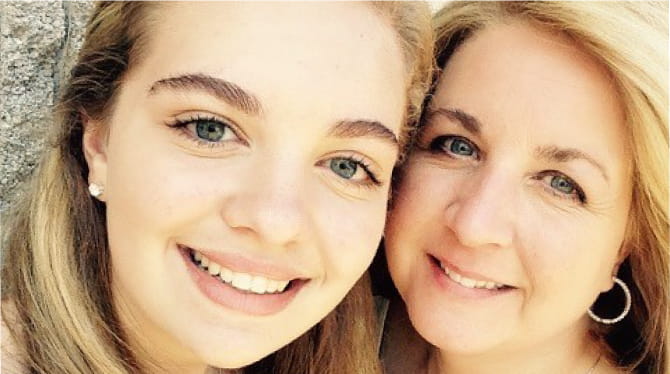
Days after learning about stroke at school, Katie Murphy recognized her mother's symptoms and got help. Katie (left) with mother Christa Murphy. (Photos courtesy of Christa Murphy)

Christa Murphy was in the bathroom getting ready for work, yet the routine wasn’t going like it should.

She kept dropping the soap in the shower. She squeezed globs of toothpaste out of the tube, seemingly everywhere but onto the bristles of her brush.

“I started to feel really strange,” she said. “But I didn’t feel sick. I didn’t have a headache.”

With her husband out of town and her son away at college, the only other person home was her daughter, Katie, an eighth-grader. Katie wasn’t even supposed to have been home that Saturday morning; she was only there because a sleepover the night before got cancelled.

Katie was in bed, watching Netflix on her phone, when Christa went into the teen’s room and asked for help.

What Katie heard was gibberish.

“What’s wrong with you?” Katie said.

As Christa struggled to give a coherent answer, Katie remembered a lesson from her science class just two days before. Teacher Beth Tomlin told the students that when a friend of hers had a stroke, her words were jumbled.

Katie immediately called her dad, but he didn’t answer. So she called her grandmother, Christa’s mom. She told Katie to take a deep breath and call 911.

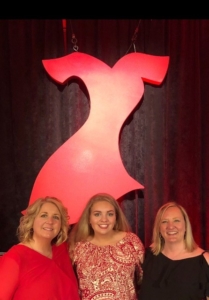
Christa and Katie Murphy with Beth Tomlin, the science teacher who taught Katie the signs of stroke.
Christa and Katie Murphy 
with Beth Tomlin,
  the science teacher 
  who taught Katie 
  the signs of stroke.
As Katie suspected, Christa was suffering a stroke – a blood vessel in her brain had become blocked. Thanks to Katie’s quick response, Christa got to the hospital in time to receive clot-busting medicine. In most cases, the medicine must be administered within three hours of the stroke’s onset; the sooner it’s delivered, the better the chances of recovery.
For Christa, the delivery came soon enough.

“It was like a switch was flipped,” she said. “Suddenly I was able to talk, my mind cleared up, and I knew I was going to survive.”

Christa was in the hospital for three days and underwent a series of tests. More than a year later, doctors still don’t know why she had the stroke. This happens in about 30 percent of all ischemic strokes; it’s classified as cryptogenic.

Christa – who lives in Menomonee Falls, Wisconsin, a suburb of Milwaukee – had no other warning signs. She has no family history, aside from a grandmother who died of a stroke at age 94.

Christa was 45. While in relatively good health, she faced plenty of stress as a mother, daughter and wife. She also worked two jobs.

Now, she’s more health conscious, eating better and regularly walking the family dog – a new addition since her recovery.

She also was recently an honoree at the American Heart Association’s Go Red for Women luncheon in Milwaukee.

Not only did she tell her story to about 400 attendees, she also watched for the first time a video in which she, Katie and Tomlin recounted the morning everything had to go right to save her life.

“The bond between the three of us will last a lifetime,” Christa said.

Stories From the Heart chronicles the inspiring journeys of heart disease and stroke survivors, caregivers and advocates.
-------------------------------------------------------------------------------------------

American Heart Association News Stories

American Heart Association News covers heart disease, stroke and related health issues. Not all views expressed in American Heart Association News stories reflect the official position of the American Heart Association.

Copyright is owned or held by the American Heart Association, Inc., and all rights are reserved. Permission is granted, at no cost and without need for further request, to link to, quote, excerpt or reprint from these stories in any medium as long as no text is altered and proper attribution is made to the American Heart Association News. See full terms of use.

HEALTH CARE DISCLAIMER: This site and its services do not constitute the practice of medical advice, diagnosis or treatment. Always talk to your health care provider for diagnosis and treatment, including your specific medical needs. If you have or suspect that you have a medical problem or condition, please contact a qualified health care professional immediately. If you are in the United States and experiencing a medical emergency, call 911 or call for emergency medical help immediately.

Sunday, October 28, 2018

Caregiver Appreciation Day

www.strokecamp.org


http://www.unitedstrokealliance.org/


United Stroke Alliance in partnership with Medtronic is launching a new resource for Stroke Support Groups called The Booster Box. Included in the box is everything a leader needs to conduct a support group meeting for up to 24 attendees.

To receive your free Booster Box please call our office at 
309-688-5450 or email info@strokecamp.org to request yours. 

Subscriptions will be available for purchase and information will be inside your free box.  

Show Me The Booster Box
*****************************************************************
*****************************************************************
The following is from the now discontinued StrokeNetNewsletter first posted in their August 2014 edition. Being a caregiver is one of the most demanding jobs there is. With the holidays coming up that extra stress is added to their already demanding tasks.

Also, today, Oct 29, 2018 is World Stroke Day. Here are some links from the USNews internet site that may interest you.

https://health.usnews.com/health-care/for-better/articles/2018-10-29/stroke-warning-signs-treatments-and-prevention
--------------------------------------------------------------------------------------------------

http://www.strokenetwork.org/

Caregiver Appreciation Day
By David Wasielewski


This past month, our stroke support group held a caregiver appreciation day. This was an opportunity for us, as survivors, to acknowledge the essential support we receive from our caregivers, be they spouses, family members or other personal assistants. Rather than focus on survivor stories and conversations we turned the focus to those who care for us.

We all know and understood our strokes from the survivor perspective. This session was an opportunity for us all to better understand how our caregivers were affected by our stroke. During early recovery in the hospital we, as survivors, find ourselves to be the center of attention. Our world centers on us, our survival and recovery. The universe revolves around our hospital bed, as it should. Doctors, nurses and therapists are paid to attend to our every need regardless of our attitude.

It’s easy to become lost within ourselves and forget about the real world. As we adjust to our post stroke selves, everyone who knows us is making similar adjustments. One challenge for survivors in recovery is to recognize and continue to keep in mind that having a stroke is not just about the survivor. One of my clearest recollections during struggles to recover was being confronted by my wife who was my primary caregiver.

As I ranted about how miserable, tired and frustrated I was she very clearly pointed out to me that “This is not only about you!!” At that point it hit me clearly that the stroke had also thrown her life into chaos. My stroke had forced her into an unexpected role and a routine that she was unprepared for and struggling to navigate. I have shared this realization with other survivors and most agree that this consideration has had a positive effect on how they move through their recovery. The caregivers that hear this advice can also understand that it is OK to explain their point of view in the situation.

Each caregiver at our session was asked to describe what had brought them to the group. These descriptions lent a very different, often unexpected perspective to each survivor’s story. Familiar survivor stories took on a new twist. Things might have been much more serious that we had been led to believe by the survivor. The survivor may not have been as cooperative in therapy or at home as we were told. The caring relationships between survivors and caregivers often became clear as they chided each other with funny stories about their struggles. It was interesting that in these serious and challenging situations we were all most able to relate to these humorous moments.

Caregivers shared how their conversations with doctors and therapists shaped their expectations for their post stroke lives. They also commented on how these expectations compared to the actual lives they now led. It became apparent how the caregivers had become the ‘invisible’ victims of our strokes. Their struggles were often secondary to the survivor. Given the opportunity to speak in this forum was our way of acknowledging and validating their reality.

As the caregivers relayed their experience several commonalities became clear. Was anyone prepared for what happened? No. Were the caregiver’s expectations realistic? Often not. Was the experience stressful, horrible, life altering? Absolutely! Are the strategies for recovery and moving on different? Yes, all are unique. Does anyone regret having done what they did in order to get to this point? No!

Everyone has gained a positive new perspective on their lives. How they view their daily routines is radically different. Their priorities have been altered. Surprisingly, as bad as these experiences were, most everyone agreed that the stroke had changed their perspective on life in mostly positive ways.

As a survivor and support group advocate I would encourage other groups to give their caregivers an opportunity to be recognized and validated. A day of appreciation is never wasted.

The following article details how caregiving can seriously affect the health of caregivers and the very real physical and emotional toll that caregiving has on a family:


http://hsd.luc.edu/newswire/news/stroke-caregivers-are-risk-depression
--------------------------------------------------------------------------------------------------
RRSC Blog Editor Note: The preceding link from the original post is no longer available. I included a link below that may be of help to caregivers, helping them recognise depression symptoms and treatment:
https://www.caregiver.org/depression-and-caregiving

--------------------------------------------------------------------------------------------------
Copyright @August 2014
The Stroke Network, Inc.
P.O. Box 492 Abingdon, Maryland 21009
All rights reserved.

Sunday, October 21, 2018

Tips for Families: Communicating With a Stroke Survivor

www.strokecamp.org


http://www.unitedstrokealliance.org/


United Stroke Alliance in partnership with Medtronic is launching a new resource for Stroke Support Groups called The Booster Box. Included in the box is everything a leader needs to conduct a support group meeting for up to 24 attendees.

To receive your free Booster Box please call our office at 
309-688-5450 or email info@strokecamp.org to request yours. 

Subscriptions will be available for purchase and information will be inside your free box.  

Show Me The Booster Box
*****************************************************************
*****************************************************************
The following is from the October 2018 American Stroke Association Stroke Connection web site:
-------------------------------------------------------------------------------------------------
Tips for Communicating: Different Types of Aphasia After Stroke
For families living with aphasia due to stroke
BY BETH CRAWFORD, MS, CCC-SLP

Companion piece to "Caring for a Survivor with Aphasia" in our Stroke Connection Fall 2016 issue.


Beth Crawford, MS, CCC-SLP

With a survivor with receptive aphasia

“Never assume that the person with receptive aphasia is comprehending your message,” Crawford said. Always verify they understand what you said by presenting your messages in a variety of ways -- writing, drawing, gesturing, looking at pictures, etc. For the person with aphasia it can be exhausting trying to keep up in a world full of words. Caregivers need to be sensitive to this fatigue, and recognize if they are not in an ideal state for comprehending language. Set the stage for successful communication by maintaining good eye contact, positioning yourself on the same level and offering a listening attitude. Dedicate some time to the interaction rather than adding to the pressure by rushing. “For someone with receptive aphasia, the actual words may not sink in, but these nonverbal cues (setting the stage, eye contact, a listening attitude) will send a clear message that you believe them to be a competent, intelligent communication partner,” she said.

With a survivor with expressive aphasia

When communicating with someone with expressive aphasia, never assume that you received the message that was intended. You have to go back and verify that you understood accurately. “You can do that in several ways, but most commonly you would try to restate their message using simple language or ask yes/no questions to verify that you understood with accuracy,” Crawford said. Accept communication in any form, and don’t fake understanding because you don’t want the survivor feel bad. Be honest when you hit a road block and ask for permission to take a break and come back to it later if you can’t think of any other way to facilitate that interaction. “But when you ask permission to take a break and come back later, make sure that you follow up on that.”

With a survivor with global aphasia

“With global aphasia, you have to continually remind yourself that verbal loss is not the same as cognitive loss,” Crawford said. “Even though they can’t always reveal it, they still can reason and use their judgment.” When communicating with a survivor with global aphasia, decrease distractions and pay attention to body language and facial expression; engage all of the senses when you’re trying to interact and communicate. “Don’t avoid interacting because it’s hard. Even if you can’t communicate specific messages all of the time, you can still achieve a social connection. Find ways to enjoy each other that don’t rely heavily on words. So you may listen to music or take walks, appreciate art, those kinds of nonlanguage activities.”
-------------------------------------------------------------------------------------------------
Copyright 2018 American Heart Association/American Stroke Association. All rights reserved.

Sunday, October 14, 2018

Yoga for Stroke Survivors

www.strokecamp.org


http://www.unitedstrokealliance.org/


United Stroke Alliance in partnership with Medtronic is launching a new resource for Stroke Support Groups called The Booster Box. Included in the box is everything a leader needs to conduct a support group meeting for up to 24 attendees.

To receive your free Booster Box please call our office at 
309-688-5450 or email info@strokecamp.org to request yours. 

Subscriptions will be available for purchase and information will be inside your free box.  

Show Me The Booster Box
*****************************************************************
*****************************************************************
The following is from an article written by Walt Kilcullen, a staff member of the Stroke Network's Newsletter which, unfortunately, has discontinued their monthly newsletters. This article was first posted in September 2011 and again in June 2014.
The StrokeNetwork itself still exists and is an excellent resource for stroke survivors and caregivers. you may join them at: http://www.strokenetwork.org/

If you have any questions about this article you may contact Walt at: at wkilcullenstrokenetwork.org
------------------------------------------------------------------------------------------------

Yoga for Stroke Survivors
By Walt Kilcullen


I started writing an article on fitness after a stroke and discovered there is a wealth of information out there giving great advice on keeping fit with exercise. I had almost completed the article when a member of my support group introduced me to adaptive yoga for people with disabilities. I began reading about this and realized that it would be better if I could see an adaptive yoga class in action. So last week, that is what I did.

The class was instructed by 
Della Moses Walker who was 
trained specifically to teach 
adaptive yoga at the Wellness
 and Enrichment Center in West
 Orange, New Jersey.

Many of the participants were
stroke survivors. The emphasis was on the individual. The pace for progress was slow so that each individual could advance at his own pace.


Della emphasized the following:
  • Yoga is a mind body connection.
  • Yoga with meditation yields relaxation of the mind and body.
  • Breathing in yoga is an important element for relaxation and concentration.
  • Adaptive yoga is designed to fit individual ability.
  • Yoga and meditation can be done independently, but it is far more beneficial if they are done together.

John McClain then led the class
to meditation. We all spent 
about fifteen minutes meditating
under John’s direction. He 
showed us how meditation
relieves tension, helps you to
find peace, creates relaxation,
and puts your mind in a natural
state.

Two common problems for stroke survivors are balance and 
weakness affecting an arm, a leg, or both. The yoga instructor 
circulated and gave instruction to each participant as needed. Some 
students were able to sit on the floor as a regular yoga class would 
begin. Others were able to lie on a mat. Some were able to stand 
holding on to the back of a chair, while others sat in chairs.

In yoga, there are many yoga poses (specific positions) that the
instructor uses. The goal is to improve balance, strength, 
flexibility, mobility, and to create an environment of relaxation
through breathing techniques. Following are examples of exercises
for chair yoga taken from Shirley Marotta,

Chair Yoga


Forward Bend – eases tension in the upper
back and neck. Breathe in and out as you
bend forward. Let your head and arms hang
over your knees. Relax into the position and
hold for a few seconds and keep breathing.
Breathe in as you slowly come back to a
seated position.

     Spiral Twist – increases circulation and
     flexibility in the spine. Sit facing forward 
     placing your left hand on the outside of your
     right knee. Place the opposite arm over the 
     back of the chair. Breathe in and breathe 
     out as you twist your body to the right.
     
    Turn your head as well. Push against your knee with your hand. Breathe normally and hold that position. Release slowly and come back to facing forward. Repeat on the opposite side if you are able.

Side Stretch – increases flexibility of the spinal
column, improves respiration, and reduces 
waistline.Sit facing forward with feet slightly 
apart, breathe in, and raise your arms out to both
sides.


Breathe out and bend to the left, reaching toward the floor with your left hand and your right hand pointing toward the ceiling. Breathe in and come back to the starting position. Repeat with the right side.


Knee Squeeze – relaxes lower back, improves digestion and respiration. Breathe out and breathe in and put both hands around the front of your knee. Pull your left knee to your chest while holding in your breath. Lower your head to your knee and hold for a few  seconds. Then release slowly while breathing out. Repeat on your right side.


Leg Lifts – strengthens legs and lower back, and
improves circulation to your legs and feet. Sit
and hold each side of the chair for balance.
Breathe out and breathe in as you lift
straightened left leg and flex your foot. Hold for
a few seconds and then slowly breathe out while
lowering your leg. Repeat with your right leg.


Sun Pose – improves circulation to your head,
massages internal organs, and limbers your 
spine and hips. Sit back in the chair with legs
apart and arms by your side.

Breathe out completely then breathe in and
with a sweeping motion bring your arms up
over your head. Look up and stretch. Breathe
out while bending forward between your legs
and if possible, put your palms on the floor.

Slowly breathe in while rising back up with
your arms over your head again, then lower your arms to the side.


Although the above chair exercises are beneficial, they are no
substitute for adaptive yoga classes because the instructor will
pattern your exercises to meet your individual abilities and needs.
You can find out where you can participate in adaptive yoga 
classes through the closest rehabilitation hospital. You may also see
if anyone in the local support group knows of such a program.

There are also two sources you may want to consider. The first is a
video called, Yoga: Renewal of Life (no longer available at this site), by the Rocky Mountain Stroke Center. Second is a book, Recovery Yoga: A Practical Guide For Chronically Ill, Injured, and Post Operative People by Sam Dworkis.

------------------------------------------------------------------------------------------------
Copyright @September 2011
The Stroke Network, Inc.
P.O. Box 492 Abingdon, Maryland 21009
All rights reserved.


Sunday, October 7, 2018

Dear Angela: An Open Letter to My Former Self

www.strokecamp.org


http://www.unitedstrokealliance.org/


United Stroke Alliance in partnership with Medtronic is launching a new resource for Stroke Support Groups called The Booster Box. Included in the box is everything a leader needs to conduct a support group meeting for up to 24 attendees.

To receive your free Booster Box please call our office at 
309-688-5450 or email info@strokecamp.org to request yours. 

Subscriptions will be available for purchase and information will be inside your free box.  

Show Me The Booster Box
*****************************************************************
*****************************************************************
I found this on the American Heart Association Support Network website: http://supportnetwork.heart.org I thought this was a rather clever and unique way of confronting a life changing experience. I'm passing it on to you and hoping that it will change the way you and I work through our own life changing problems. I also hope it impresses on you the importance of not ignoring any signs similar to what Angela experienced. Stroke is not a wait-and-see-if-this goes-away type of diagnosis.
----------------------------------------------------------------------------------------------------
Dear Angela: An Open Letter to My Former Self by Angela Hager October 29, 2017 3:17pm EST


In recognition of World Stroke Day 2017, I decided to do something a little out of the ordinary: write an open letter to my former, pre-stroke self for all to read. My hope is that this piece will offer encouragement, inspiration and maybe even a little motivation to anyone either directly or indirectly affected by stroke.

Dear Angela,
My decision to write this letter wasn’t an easy one to make, but in time, you’ll come to understand that my need to write these things ultimately outweighed my hesitation. At 34 years old, life is comfortable. A routine has been established and the task of balancing work and family life has gotten easier. You’re a planner by nature and thrive on organization and predictability. So far, the storms you have encountered have been weathered pretty well; however, as you’ll soon discover, a darkness like you’ve never known looms just around the next bend.

Over the course of the next several months, you will begin to experience a series of “odd” moments, both physically and mentally speaking. These occurrences will pass rather quickly, giving you reason to chalk each of them up to just “one of those fluke things.” Unbeknownst to you, these seemingly trivial oversights will end up covering you in a thick, smothering cloak of regret…

The first oddity will be a sudden change in your eyesight; your vision will unexpectedly shatter into a million colorful pieces, almost as if you’re looking through a kaleidoscope. This effect will dissipate almost as quickly as it appeared, much to your relief. You’ll tell yourself that you just need to eat something and after a quick bite, all will be forgotten.

The next bizarre episode will be mental in nature. You’ll experience a brief bout with confusion at your place of employment. You’ll sit silently in a befuddled state, unsure of your assigned tasks. Again, this phenomenon will come and go within a matter of seconds. Once your brain regains its focus, you’ll shake it off, grab the next patient chart and simply carry on with your workday.

The third incident will appear to be more of an embarrassing mishap than anything else. A fast-paced walk down an office corridor will come to an abrupt halt with a sudden fall to the floor. You’ll pick yourself up with a bruised ego and place full blame on your newly acquired pair of heels. Little do you know that at this point, you are now barreling straight towards the eye of a storm so dark and so fierce that you’ll question whether or not the sun will ever shine for you again.

Just before your 35th birthday, your life will be irreparably split into two, very separate, very distinct chapters; pre-incident Angela and post-incident Angela. On a hectic morning in early June, you’ll be stopped in your tracks by a very strong ‘locked-in’ sensation. You’ll suddenly lose the ability to think straight or speak clearly. The left side of your body will lose its strength and simultaneously, you’ll feel a sense of numbness wash over your limbs. You will literally be frozen in terror. Once your mind loosens its grip on your body and you regain some control, you’ll notice a drool stain on your blouse. This will be the telltale sign for you: at 34 years of age, you just suffered a stroke.

The following days/months/years will be chock-full of every emotion imaginable. You’ll spend many days in bed, particularly in the beginning of your post-stroke journey, unable to function due to depression. You’ll often lash out in fear and anger and you will resent yourself deeply for not recognizing those earlier “flukes” as actual TIAs, or mini-strokes. Oh, the power of hindsight…

Although your stroke will be diagnosed as ‘mild,’ the lingering mental challenges will be devastating to you. You will be unable to return to your fast-paced work environment and the art of multi-tasking will become virtually impossible. Confusion, memory lapses and sensory overload issues will be at the forefront of your difficulties. Anxiety and insomnia will undoubtedly haunt you on a regular basis. The Angela that existed before your stroke will remain a distant memory, but take heart, sweet lady, I can assure you that all will not be lost nor in vain.

As difficult as it is to imagine, I promise that you will find happiness again. Learning to love the new you won’t be an easy journey, but with the unconditional love and constant support from your friends and family, you, we, eventually make it through to the other side. In the end, we will have gained a new perspective; a new appreciation for the simple things in life. Time is now more precious to us than ever and we grab hold of every opportunity to say, ‘I love you.’ No, all is definitely not lost. Our life may not be perfect, but I can genuinely tell you this truth: we’re now in a really, really good place; a place where the sun has never shone brighter.

Stay strong, from one Angela to the other.
----------------------------------------------------------------------------------------------------
Copyright @September 2016
The Stroke Network, Inc.
P.O. Box 492 Abingdon, Maryland 21009
All rights reserved.