By Monica Vest Wheeler Retreat & Refresh Stroke Camp Staff Volunteer
It was so exciting to be part of our second camp of the year and the first camp near Miami in mid-May, thanks to the sponsorship of Medtronic, in Association with Boca Raton Regional Hospital.
It's always so rewarding to be present for the birthing of the new camp, and this camp in Delray Beach was no exception. It was my first for the year, and there was much to do and learn with the new theme and activities built around a strong foundation that was started in 2004 by our founder Marylee Nunley and her husband John, a stroke survivor.
There's magic at every camp, and the Miami camp gave us many memorable moments. Here are just a few …
The following is from the American Heart Association and posted on the Support Network Blog. The following link will take you to their site and their original posting:
I have highlighted a few sentences for emphasis. by The American Heart Association The science behind this could fill a library. The dangers of ignoring it could fill a morgue.You’ve heard it for years: Cut down on sodium. The more salt in your diet, the more problems for your body.
Chilling as that sounds, we know that too much sodium can cause high blood pressure, and we know that high blood pressure is a primary cause of heart disease and stroke, the two leading causes of death in the world. Nearly a billion people globally, and about 80 million American adults, have high blood pressure. If you’re not already in that group, be aware that 90 percent of us will develop this condition at some point in our lives. The really scary part is that millions of Americans have high blood pressure, but haven’t checked their BP, so they don’t even know it!
Sodium is sneaky, too. It goes way beyond the salt shaker. Nearly 80 percent of the salt we consume comes from some of the processed and prepared foods we buy at grocery stores and restaurants.
Fortunately, the outlook is encouraging. Making it possible for us to control the salt in our diets - and, thus, improve our health - is a priority for the people and organizations who can truly effect change.
In Washington, D.C., the Food and Drug Administration is expected to ask the food industry to join together to voluntarily reduce sodium in processed products and restaurant foods. We applaud the FDA, the U.S. Department of Agriculture and others, including the Congress members who remain steadfast in their defense and support of sound nutrition policy.
Several major food companies have climbed aboard, too. We’ve seen announcements about plans to lower the amount of sodium in their products - and some already have done it.
To fully grasp why sodium control is such a crucial issue, let’s go over some basics.
Sodium is a mineral that’s essential for life. It helps your body control fluid balance, affects muscle function and nerve impulses. However, as is often the case, too much of a good thing can be a problem.
The average American consumes 3,400 milligrams of sodium per day. That’s more than double the 1,500 milligrams recommended by my organization, the American Heart Association. It’s also way above the maximum 2,300 milligrams recommended by our government in its 2015 Dietary Guidelines for Americans.
What happens when you consume too much sodium?
Water gets pulled into your blood vessels, raising the volume of blood flowing through those vessels. To put the science into everyday terms, imagine turning up the supply of water to your garden hose. The tube can handle it for a while, but over time the added pressure will cause the rubber to expand, thinning it out until eventually it can be damaged or even crack.
Switching back to the body, high blood pressure can damage your blood vessels so they can’t widen to provide all the blood flow you need. It can speed the buildup of plaque, which further blocks blood flow. It also forces the heart to work harder to pump blood through the body. And if that leads to heart failure or kidney failure, that can be a terrible outcome - one you certainly want to avoid.
Only about 11 percent of our sodium intake comes from salt we add while cooking or eating. About 12 percent comes naturally in foods. The rest? All added before the food ever gets to us. Sodium is used to add flavor and as a preservative, either to keep food safe, enhance the color or to give it a firmer texture. These are reasonable uses; again, the problem comes from too much of a good thing.
It’s also worth noting that evidence shows there are specific populations that should not lower sodium intake, such as those regularly working in extreme heat or suffering from a specific illness. Still, these are the exceptions to the rule, which we know to be that, in general, Americans need to reduce sodium consumption.
Within the last month, Nestle, Mars Food, Unilever and PepsiCo announced support of FDA’s plan for voluntary sodium targets.
Last year, General Mills announced that it already had cut up to 20 percent in many products. Domino’s, Schwan’s and Revolution Foods are among others moving in this direction. Aramark has committed to a 20 percent reduction by 2020.
Subway, which in 2011 was among the first major quick-serve restaurant company to voluntary cut back on sodium, continues to offer lower-salt sandwiches.
The biggest culprits in our diet may surprise you: bread and rolls; cold cuts and meats; pizza; poultry; soup; and sandwiches. After seeing such a list, you may not be surprised to learn that, just like adults, nine in 10 children get way too much sodium.
The American Heart Association is no lone drummer banging the anti-sodium beat. We’re part of a marching band of prestigious organizations all aligned behind reducing sodium intake from the dangerously high levels now consumed. This list of heavy hitters includes: the Department of Health and Human Services; the National Heart, Lung, and Blood Institute; Centers for Disease Control and Prevention; the World Health Organization; the American Medical Association; the American Academy of Pediatrics; the American College of Cardiology; the Academy of Nutrition and Dietetics; the American Society of Nephrology; the U.S. Department of Agriculture; the American Society for Hypertension; the Pan American Health Organization; the Food and Agriculture Organization of the Americas; American Public Health Association; Institute of Medicine and more.
These organizations have studied what happens when people consume too much sodium and all concluded that we need to reduce salt to healthy levels.
This is not just a U.S. issue, either. In fact, as a country, we are late to the sodium-reduction movement. Our neighbors to the north and south — Canada and Mexico — are among the 50-plus countries that have adopted voluntary or mandatory reductions in the salt content of certain foods. The United Kingdom has been doing this for years.
So, why does opposition still exist? Why are people saying that all these big, prominent, science-based organizations are making too big a deal out of this?
I encourage you to investigate how and why they came to their conclusions. Feel free to study ours, too. I also recommend comparing the volume and breadth of people on each side of the fight. I believe you will come away ready to pledge to eat less salt and willing to lend your voice to the chorus seeking to change the way Americans think about and consume sodium.
We’re not saying the rise in sodium intake is the only reason why one in three Americans have high blood pressure, but we feel quite strongly that it’s a major reason for it.
The rise in our daily sodium intake and the massive amounts of sodium in our food supply also didn’t happen overnight. It’s taken years to get to this point.
All the American Heart Association, some leaders in the food industry and leading science-based organizations are saying is, let’s try going in the other direction to see what happens.
Last March of this year I posted this same article. I'm re-posting it now because now that the camp year has started it might be more meaningful to those of you who have an interest in volunteer work. We have around 28 camps scheduled this year all through the United States. There may be a camp scheduled in your area that you may be able to help with. Go to http://strokecamp.org/?camplist&camplist to see this year's schedule. Please call us soon as the volunteer slots fill up fast. Will you take some time right now to listen to that little inner voice that may be directing you in a very meaningful and rewarding direction. If you do, my hope is that it is speaking to you about us. If any of our needs listed below interest you, please feel free to contact us using the phone number or addresses at the bottom of this post for further information or to answer any questions you might have . -----------------------------------------
Kathy Hutton was a high school junior when she fell in love with her husband, David.
“It was love at first sight,” Kathy said. “He was the cutest thing I’d ever seen.”
Two years later, they were married and soon had son Graham and daughter Chelsea. David worked as a disc jockey for a local radio station and money was tight.
Kathy Hutton with her husband David, who suffered a disabling stroke two years ago.
“We were poor, so we couldn’t do much. But I remember special moments just sitting at a park and talking,” Kathy said. “That’s what I miss the most, the talking.”
In January 2014, David had a stroke after shoveling an unexpected snowfall that had kept the couple from Lebanon, Missouri, home for the day.
Kathy had been napping when she heard a crash in the kitchen. She found David, then 53, on the floor, his speech slurring. At first, she thought he was just tired from shoveling snow, but when David tried to support himself to stand, his right arm gave out.
At the local hospital, he received the clot-busting drug tPA and was transported to a stroke center in Springfield, Missouri, where testing showed swelling in his brain.
Doctors performed a craniotomy, temporarily removing the left bone flap of David’s skull to relieve the pressure. The stroke had caused significant damage to the left side of his brain.
“He lost control of the entire right side of his body,” Kathy said.
David spent several weeks in the hospital, and nearly six months in a rehabilitation center before going home.
At the time of his stroke, David was being treated for high blood pressure and high cholesterol. He had a family history of heart disease, losing family members on both sides to heart attack.
“I always figured he’d die of a heart attack too, but I never imagined he could have a stroke,” Kathy said.
Stroke is the No. 5 cause of death in the United States and is a leading cause of disability.
David now spends his days in a motorized wheelchair or a recliner chair. A home health aide comes each day while Kathy goes to work as a cemetery administrator.
Kathy Hutton with her husband David, who suffered a disabling stroke two years ago.
The Huttons, who recently celebrated their 33rd anniversary, can no longer afford rehabilitation therapy due to reductions in Medicaid benefits. David can stand briefly, but not much else. His speech is limited to a few words, along with gestures that Kathy does her best to translate.
“Sometimes he gets really angry, and so do I, because I can’t always figure out what he wants,” she said.
Kathy gets encouragement and some help from extended family and friends, as well as Graham, who is now 30, and Chelsea, who is 25.
“It’s tough,” she said. “Sometimes I feel really alone.”
On the rare occasion she can get away, Kathy goes to a movie or eats out with a friend. She found a local support group but can’t attend because it meets when she’s at work.
As hard as coping can be, Kathy said it’s the little moments she misses most.
“That little kiss you get in the car at a red light, I’ll never get that again,” she said. “That’s the hardest part.”
One bright spot for the couple has been visits from their four grandchildren, who are all under 6 years old.
“To them, he’s just grandpa and they’ll climb up on his chair and love him or try to help,” Kathy said. “They don’t see disability, they just see him as a person.”
Our season has begun! We already have four camps under our belt.
Camp is all about being yourself and embracing life again when stroke works overtime... Stroke survivors and caregivers need a break from the stress of everyday life. They even need a break from each other! We know that survivors need to engage with other survivors. Caregivers need the same outlet. Our three-day weekend camps blend all the essential ingredients of what "normal" folks enjoy.
In April we did one in Iowa, in May we did one in Miami, Florida and this weekend we have two at the same time, one in Prescott, Arizona and one near Tucson, Arizona. So far we have 28 camps scheduled for this year and there are a few more pending. As I get photos from each camp I will post a few of them on this blog.
Today I'll showcase our first camp which was in Iowa:
It's still a bit early in the spring and the trees haven't quite filled out yet.
And maybe a wee bit chilly but those Iowans are a hardy bunch. And all of our activities are done indoors anyway except for this evening marshmallow roast and there may be some fishing during the day if anyone is up to it. We started taking registrations at Camp Courageous around two o'clock Friday afternoon. Of course the volunteers started setting things up way before that. Like around eleven in the morning.
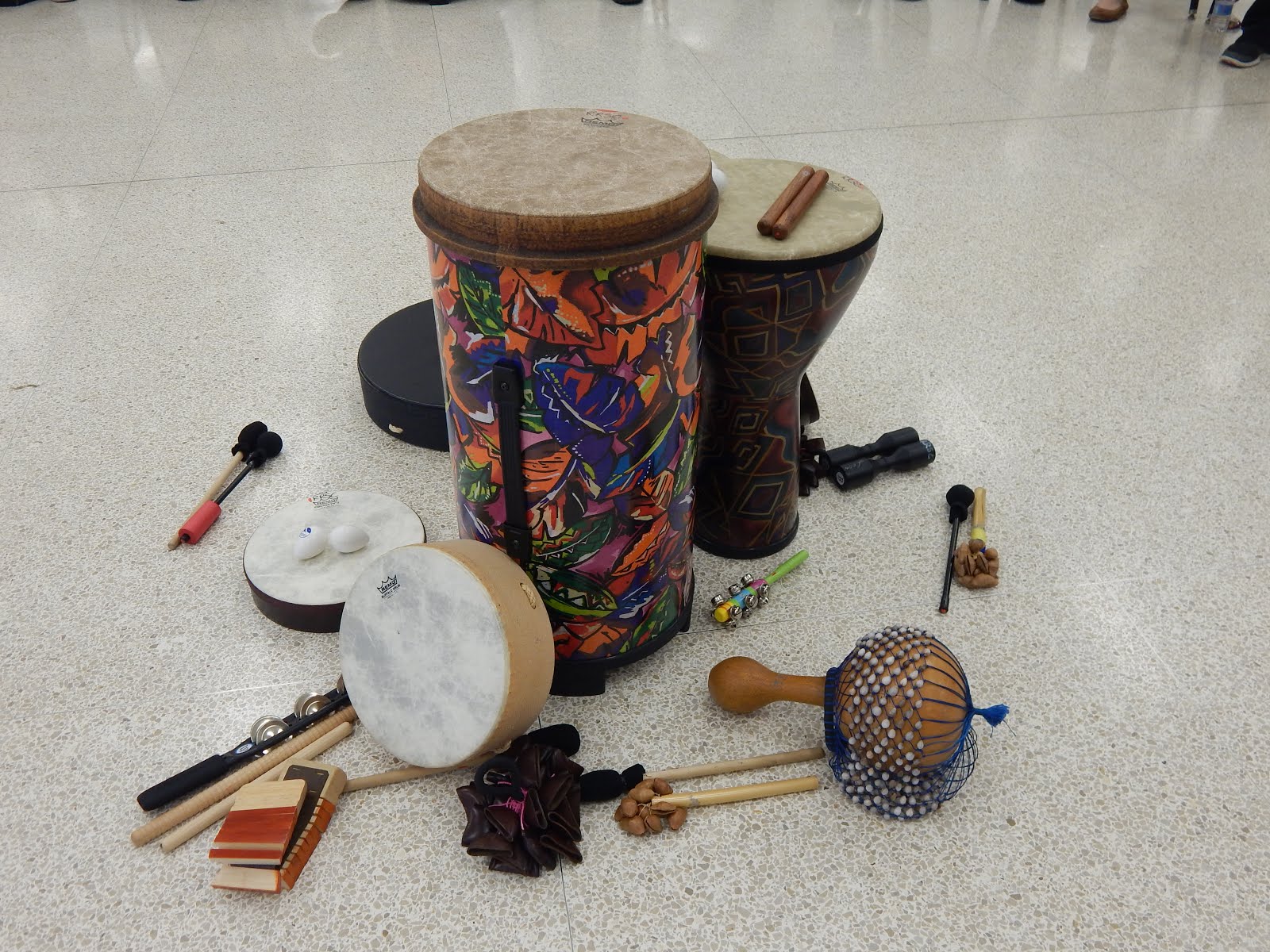
As is customary we open every camp with a drum circle.
Here we have Kyle and Lindsey,
two of our very experienced and talented music therapists, who were also the camp directors this weekend.
Our theme this year is the 1980's. We start by forming teams for the Saturday night 80's game show team competitions. Each team chooses a name and makes a poster.
More about Saturday night later but first I wanted you to see what else we do during the day.
We do crafts.
We pamper you with massages
and nail polish.
And whatever the heck this is.
(Looks like hand waxing and head massages)
Camp Courageous also has a rock climbing wall as do a couple of our other camp locations. Yes, that is a stroke survivor stepping outside his comfort zone. That happens a lot at our camps. Remember I mentioned the 80's and Saturday night. And team games
Well I can't tell you everything. You'll just have to come to a camp and see for yourself what goes on there. The camp wraps up around noon Sunday and there is a lot more going on than I can show here. If I can get a hold of some pictures I'll show you next week what happened in Miami last week. Rest assured, I will eventually. ******************************************************************************8
The XFINITY internet is under maintenance and having problems so this week's blog will not be posting a camp report as I planned. Please stand by and hopefully they get things working by next weekend.
Please go to this web address to look for camps in your area.
Last March you were introduced to Laura through her article titled "Personal Testimony of Laura T. Barnett". If you wish to review that article, click on the archive link for March at the right of your screen.
This is an excerpt from Chapter 1 of her unpublished book, Blink Twice If You Mean Yes. by Laura T Barnett I find out much later from a speech therapist that I have a condition known as DYSARTHRIA. It differs from aphasia in that the muscles involved in speech have been affected by the stroke like the lips, tongue, diaphragm, etc. BLINKING – A NEW WAY OF TALKING!
Mike, Mom, and a nurse were talking to me. They were probably wondering how much of what they were saying reached me.
Mike began, “Now, Laura, we’re going to ask you some questions. Blink once if the answer is no, and twice if you mean yes.”
What a great idea! Now they’ll know that I understand what they’re talking about.
Mike asked, “Are my eyes blue?”
Trying to focus on them, I remembered that they were brown, and I blinked for no.
He asked, “Are they brown?”
I blinked twice for yes.
The nurse asked, “Is it 1981?”
I blinked once for no.
“Is it 1980?”
I blinked twice for yes, which was correct.
Now Mike asked, “Is Carter the president of the United States?”
This question, I had to think about. I blinked one time while thinking about it, and then one more time, which again was right.
Mike and Mom left to return to work. Two or three nurses began bombarding me with questions; to all of them I blinked correctly. Excitedly, one nurse exclaimed, “We’re going to post a sign by your bed! It will read, ‘Laura Barnett seems to understand everything!’”
Big deal.
Laura Barnett---
Copyright notice: Please do not copy or forward any part of this blog article without written permission from Laura T. Barnett. If you wish to do so, please leave a comment on this article with your contact information.
The following is a re-posting from the American Heart Association News website: news.heart.org.
Stroke survivor confronts fear it could happen again
By AMERICAN HEART ASSOCIATION NEWS
Nicole Enteado woke up on Nov. 29, 2014, thinking about a fun day of holiday shopping she had planned. But after about a half hour of lounging around, a strange sensation suddenly came over her.
“It was almost like feeling drunk,” she said, adding that she also began drooling.
She reached for a glass of water, but her dominant left hand wouldn’t move. Using her right hand, she took a swig, only have it dribble down her chin.
Confused, Enteado made her way to the bathroom, her legs feeling oddly heavy. Looking in the mirror, she saw the left side of her face was drooping.
Although she was experiencing all the classic symptoms of stroke, Enteado didn’t realize it.
“I was 26 and healthy and active. There was no way I could be having a stroke,” said Enteado, who lives in Newport, Rhode Island.
Panicked, she called her parents, but by then her speech sounded garbled. Her parents thought it might be an allergic reaction so a friend drove Enteado to her parents’ home 20 minutes away. They took her to the nearest hospital, where testing revealed she was having a stroke.
By then, nearly three hours had passed since her symptoms first began. Enteado’s speech was completely gone and her left side was paralyzed.
Enteado was given a clot-busting medication called tPA, which must be given within the first 4 1/2 hours after the onset of stroke symptoms, and transferred to a larger regional hospital.
Over the next two days, the feeling on Enteado’s left side returned, along with her speech. She spent a week in the hospital, and then another six weeks rebuilding her strength at home through yoga.
It was a bumpy recovery, as Enteado overcame lingering weakness and grappled with what had happened to her.
“You think of yourself as healthy, but it was like my body had failed me,” she said.
She experienced anxiety, which is common among stroke survivors.
“My mom compared me to a skittish cat,” she said. “I just kept worrying it would happen again. I had to keep reminding myself that I know the signs and symptoms now, and I can’t let the fear of another stroke keep me from living my life.”
It took about six months for her to feel normal again; Enteado still remembers the relief she felt the day it happened.
“It was a Friday evening and I was coming home and feeling really good,” she said. “I realized that I finally felt like myself again.”
Enteado’s doctors aren’t sure what caused her stroke, but pointed to her history of migraines and use of birth control pills as potential contributors. Throughout her life, Enteado suffered from constant headaches that would develop into debilitating migraines several times a year.
“My mom got them and my grandmother got them, so I didn’t realize that wasn’t normal,” she said.
Enteado now works with a neurologist to prevent migraines, which unexpectedly became more frequent following her stroke. She also takes blood thinners to minimize the risk of another stroke.
The only other lingering effect from her stroke is mild numbness that can make it difficult to control the left side of her face when she’s overly tired, though it has been subsiding with time.
Stroke is the fifth-leading killer of Americans, and a leading cause of disability. The experience has motivated Enteado, now 27, to raise stroke awareness in hopes that others will recognize the symptoms – face drooping, arm weakness, speech difficulty – and call 911 quickly, no matter their age.
Looking back, Enteado said she now realizes she wasted valuable time by going first to her parents’ house when her symptoms began.
“Knowing what I know now, I would have gone straight to the hospital,” she said.
Enteado works for jewelry and accessory brand Alex and Ani. Inspired by Enteado’s experience and stories from other stroke survivors, the company released a special bangle, available Wednesday, evoking a butterfly motif called “Wings of Change.” Alex and Ani will donate 20 percent of the purchase price to the American Heart Association/American Stroke Association. The company’s “Best Friends” bangle, released in 2012 to commemorate heart health, has generated more than $3 million for AHA.
The experience changed Enteado’s perspective on life, helping her to let go of the little things that used to stress her out.
“I realized how easy it is to take life for granted,” she said, “so now I try to live life every day with a positive attitude and be grateful for this second chance.”
If I have a stroke, I’d like my family to hang this wish list up
on the wall where I live and where you live. And, pass it on to your friends and relatives:
Rules for a Good Life After a Stroke
If I have a stroke, I want my friends and
family to embrace my reality. I am still the same person on the inside. I just
have difficulty getting it on the outside. Please be patient with me and let me
finish. Remember, I'm rebuilding my brain pathways.
If I have a stroke, I don’t want to be treated like a
child. Talk to me like the adult that I am.
If I have a stroke, I still want to enjoy the things that I’ve
always enjoyed. Help me find a way to exercise, read and visit with friends.
Don’t isolate me. I still need my friends, and my friends can help me improve
just by being there.
If I have a stroke, don’t be afraid to reminisce with me. I still
like to hear about the fun things we did. Remember, I'm rebuilding my brain pathways.
If I have a stroke, and I become agitated, take the time to figure
out what is bothering me. Sometimes I have no control over my emotions but don’t
worry, I won’t hurt you. Remember, I'm rebuilding my brain pathways.
If I have a stroke, treat me the way that you would want to be
treated.
If I have a stroke, make sure that there are plenty of snacks for
me in the house. Even now, if I don’t eat I get angry, and if I have a stroke,
I may have trouble explaining what I need. Remember, I'm rebuilding my brain pathways.
If I have a stroke, don’t talk about me as if I’m not in the room. Remember, I'm rebuilding my brain pathways.
If I have a stroke and you are my caregiver, don’t feel guilty if
you can’t care for me 24 hours a day, 7 days a week. It’s not your fault, and
you’ve done your best. It would help if you can find someone who can help you.
If I have a stroke and you are a friend, the best thing you can do
for me is ask my caregiver if there is something you can help with. It doesn’t
have to be much they’ll appreciate any help they can get, big or small.
If I have a stroke, and I have to live in a stroke care facility
like a nursing home, or some such, please visit me often.
If I have a stroke, don’t act frustrated if I mix up names, events
or places. Take a deep breath. It’s not my fault and it's not your fault. Remember, I'm rebuilding my brain pathways.
If I have a stroke, don’t exclude me from parties and family
gatherings. Social interaction helps me improve. Remember, I'm rebuilding my brain pathways.
If I have a stroke, know that I still like receiving hugs or
handshakes.
If I have a stroke,
remember that I am still the person you know and love, I'm just rebuilding my brain pathways.
By Monica Vest Wheeler Retreat & Refresh Stroke Camp Staff Volunteer
Upon hearing of the recent unexpected passing of one of our stroke survivors, Ken West, I was immediately sad … yet was just as quickly glad that I had been hanging around with my video camera during our Dignity Health-sponsored camp in Prescott, AZ, last May.
I know I've said it before, but I'll say it again that I witness so many miracles at every Stroke Camp. One of those revealed itself as Ken was encouraged to play the keyboard with music therapist Amy Baumert during free time Saturday morning. Ken had severe aphasia — difficulty with receptive or expressive communication — and yet, with the magic of music, he could sing many of those well-learned songs of life. He is just one of many, many examples of why music therapy is such an important part of the Stroke Camp experience.
He practiced with Amy, and then performed in front of the entire camp on Sunday morning. I was captivated by his deep voice and how much he had achieved. Most of all, I loved his laugh, especially when he was laughing at himself. And the applause after his presentation was so genuine and rich, filling each of us with deep joy and even a few tears.
Please take two minutes of your precious time to listen to Ken, an extraordinary man beloved by so many. Our deepest sympathy to his wife Carla and family. He was a gift to all of us …
For those of you who are getting these posts via email, I have replaced the previous SOS article, due to its poor print quality, with this one. This article was taken from a Strike Out Stroke Facebook posting I got last January. Strike Out Stroke is a registered trademark and is a division of Retreat & Refresh Stroke Camp. I don't know who the author is but I do appreciate their information. If anyone knows please let me know so that I can give proper credit.When someone survives a stroke, a family feels relief, happiness, and joy. But no one can be prepared for the perplexing wave of emotions that a stroke survivor experiences.
Although emotional changes after stroke are typical, the impact on a survivor’s personality may be the most difficult to deal with. For caregivers and families, it’s important to remember that stroke causes trauma to the brain and that the behaviors and responses displayed are a reflection of that injury.
Recognizing and coping with the behavioral changes that accompany stroke are just as important as addressing physical issues during the rehabilitation process. Emotional reactions are complicated by the array of sensory and motor disabilities that follow brain damage from stroke. Survivors struggle with deficits in language, reading, writing, speech, memory, judgment, planning and so much more. These cognitive problems can weigh heavy on stroke survivors and their families. Conflict may arise when the survivor feels misunderstood or utter despair over the loss of physical capabilities.
While some emotions are “normal” responses to biological and lifestyle changes after stroke, other feelings may signal a more serious problem.
To help you understand what your loved one is going through, here are the most common emotional reactions that accompany stroke:
Emotional lability – Following a stroke, the person may seem like a stranger: survivors may respond one way immediately after the event, only to respond differently a week or two later. Soon after stroke, the person may struggle to control his or her emotions. Survivors are said to be “emotionally labile”, meaning they are prone to strong feelings and rapid mood swings. The person may embark on fits of laughing or tears that do not fit’s their mood or seem inappropriate for the situation. They may be happy and sad in only a few minutes.
Impulsivity – Stroke survivors can be impatient and impulsive. Because areas of the brain are disinhibited, stroke survivors may be more impulsive. They fail to think ahead, or move too quickly – possibly causing themselves or those around them harm in the process. Caregivers should be especially watchful for this reaction when makingdecisions about a stroke survivor’s ability to drive a car. Anxiety – Anxiety is considered a “normal” reaction to lifestyle adjustment following stroke. As a person begins to cope with their new disabilities, they may feel a sense of loss that triggers anxious feelings. Anxiety is frequently associated with periods when a person is left along for a period of time. Fears can arise of another medical emergency, their growing dependence on caretakers, and helpless for their condition.
Self-centered behavior – Insensitivity to others is commonly seen in post-stroke patients. Many survivors become largely concerned with their own interests and exhibit inflexible, rigid thinking. This lack of empathy can contribute to demanding behavior. Caregivers can feel as if the person is impossible to reason with, which could result in the breakdown of family ties and important social bonds.
Apathy – Stroke survivors may be content with sitting around for hours without doing nothing at all. While this lack of motivation may be alarming to caregivers, apathy is a consequence of damaged brain areas. Stroke survivors may lack initiative and show little feeling or interest in activities. It’s important to note, however that apathy is different than being tired or depressed: An apathetic person feels content with their state of being, whereas a depressed person feels despair.
Depression – Depression is a common reaction following any life-altering event, including stroke. Survivors may feel a sense of sorrow for activities they were previously able to do. Many question their self-worth; people value themselves through their activities. A loss of identity can result in depression, anger and frustration. Both patients and family members may cycle through the stages of the grieving process (denial, anger, bargaining, depression, and acceptance).
Post-stroke depression is characterized by:
Feelings of sadness
A sense of hopelessness or helplessness
Increased irritability
Changes in eating, sleeping and thought patterns
Treatment for post-stroke depression may be necessary. If the person’s depressive symptoms worsen over time, interfere with daily functioning, or include suicidal thoughts and ideation – consult a medical professional immediately. A range of therapies and treatment options are available to help.
Are post-stroke personality changes permanent?
Personality changes that occur after a stroke are often the hardest to deal with. Luckily, not all changes are permanent. As the recovery process advances, some reactions may disappear. The person may “mellow out” over time as he or she builds coping skills and adjusts to life as a stroke survivor.
How to cope with changing behaviors after stroke:
Be patient. Have understanding that your loved one is facing many challenges and in most cases, cannot help behaving in undesirable ways.
Remind yourself that these behaviors are a part of the brain injury. Stay strong for your loved one – your support is important.
If your loved one is having angry outbursts, try to find what triggers him or her. It could help prevent future incidents.
Stay calm. Avoid raising your voice when you talk to the person and take a time out if you need to deal with the problem alone.
Talk with other family members about the changes your loved one is going through. Educate them on what to look for and how they can help if your loved one is having an especially bad day.
Seek counseling or join a support group. Working through your frustrations with others who are in similar situations can be helpful and healing.
Discuss personality changes with your healthcare provider. You doctor can help you assess your loved one’s health condition and provide recommendations on post-stroke recovery.
Will you take some time right now to listen to that little inner voice that may be directing you in a very meaningful and rewarding direction. If you do, my hope is that it is speaking to you about us. If any of our needs listed below interest you, please feel free to contact us using the phone number or addresses at the bottom of this post for further information or to answer any questions you might have . -----------------------------------------