Sunday, October 18, 2015

Strike Out Stroke Survivors

                  COURAGE, 
HOPE,
RESILIENCY


Teaching Stroke Awareness is Strike Out Stroke's Mission and celebrating stroke survivors tenacity and determination is a driving force in educating the public about this devastating disease.

Putting a human face on stroke is a goal of SOS. Who are the people afflicted by Stroke and what does it take to recover? How does stroke impact a survivor and their family? 
What kind of outcomes do stroke survivors face for their lives? 


Strike Out Stroke Events select outstanding candidates to represent the gender, age and ethnic diversity of stroke survivors as well as the multiplicity of outcomes and to represent the drive that moves stroke victims from personal adversity to social advocacy.

The life stories are inspirational, touching baseball fans to rally to advocate in their own lives and social circles.


Survivors ....walk, limp and roll onto the field proud of their recovered abilities....they demonstrate that young people and children, black, brown, white and yellow have strokes ....and with hard work the human spirit will recover, revive, recreate a new spirit in a stroke survivor! They all deserve to be uplifted and CELEBRATED!

Visit strikeoutstroke.com


*************************************************************************************************************************

Tuesday, October 13, 2015

RRSC October/November 2015 Newsletter

The following is from our camp's October/November Newsletter.In this newsletter we will hear from Larry Schaer, Associate Director, who is sitting in the "directors" chair this issue.
-----
by Larry Schaer
Today I want to share an observation with all of you. As the Associate Director of Retreat & Refresh Stroke Camp I have the privilege of meeting hundreds of people across the country through stroke camps and Strike Out Stroke events. It is truly amazing to see people taking the initiative to educate and support stroke survivors in their respective communities. Little did we know the decision to take stroke camp "on the road" would have such an impact in communities across the country.

In 2007, we made a decision to create a national network of stroke camps. Today we see the fruit of that decision where survivors, caregivers, family members, sponsors and volunteers are making a positive difference in their own communities. It is not unusual to see fundraisers, 5th grade education classes, Strike Out Stroke events across the country. For example, a couple of camp volunteers have planned an event, dancing with the docs, to raise funds for multiple camps in the Phoenix area. A Denver stroke survivor created his own non-profit organization tt,,at provides cycling and snowboarding opportunities for stroke survivors {see related article in this newsletter). A California stroke survivor planned and conducted her own Strike Out Stroke in her community.

The common denominator in these stories is the fact that all of them have participated in one of our stroke camps. It is our belief there are many stories where ordinary people are making miracles that are improving the quality of life in their communities. If you have a story we would like to hear it. If you'd like to send your story, just forward it to us at info@strokecamp.org. Want to call us, the number is 309-688-5450.
-------
Survivor Spotlight

It happened the morning of August 2, 1983, twenty-four days before my 30th birthday and I was living the American dream. I had a beautiful wife; we had our first daughter, born in July. We had a house, cars, money in savings and I was in the process of starting my own business. Life was good, but on that day while spending the afternoon with my in-laws, I had my first stroke. My future was to include seven strokes within three and a half years.

By my fifth stroke my doctor told me to go visit with a psychologist to deal with my own death. He did not know what was causing me to have these cerebral accidents. The test following my sixth stroke led to a diagnoses of my disease, Granulomatous Angiitis known now as Isolated Angiitis of the Central Nervous System.

It was between my fifth and sixth strokes that a close friend of mine invited me to go skiing. We had ski raced in our high school years, and after, until my first stroke. This day of skiing was the first time since this whole ordeal had begun, no doctors, no appointments, no hospital stays, nothing but skiing. This would have a profound effect on my future, right up to today.

After my seventh stroke, there were problems and challenges in the ER and I was feeling down and sorry for myself. The morning of the third day I thought to myself  "this is not doing me a damn a bit of good." I went to the speech rehab center and held up my note "teach me how to speak." My rehab button was on again!

In the fall of 1987 I saw an ad on the television for instructors to teach the disabled how to ski. I decided to became an instructor and have taught for 21 years. The discovery that there was no formal instruction for stroke survivors to learn to ski, led to the formation of the Snow Strokers of Colorado. When a few of us stroke survivors and their caregivers started riding our bicycles at the Aurora Reservoir, the Spoke Strokers were formed.
The whole purpose of the Snow Strokers of Colorado and the Spoke Strokers is to integrate the mental and physical rehabilitation in an outdoor environment for stroke survivors. There is something therapeutic about being outdoors in the fresh air, with blue sky, and sunshine. That is why we are here - to help all stroke survivors. 
**********************************************************************************************************************

Sunday, October 4, 2015

So much beauty … inside and out

By Monica Vest Wheeler
Retreat & Refresh Stroke Camp Staff Volunteer

I'm smiling all the time at the Stroke Camps I attend, but a survivor this year — who was attending her first camp — put an extra big smile on my face when she asked if I'd take her photo after she had finished a session with the Mary Kay ladies who had volunteered their services at this particular camp.

Of course!

High on Stroke Camp's priority list is a pampering experience for our caregivers and survivors because everyone deserves to be pampered, especially our campers! Since I started volunteering in 2008, I've witnessed some wonderful moments … from survivors who haven't put on make-up since their stroke because they had to focus on more important things like surviving everyday life with the use of only one hand, usually their non-dominant one … to caregivers who also have more important challenges in getting everyone through everyday life in a post-stroke world.

This post isn't about women and make-up. (We've also had quite a few men who enjoyed their first-ever facial!) It's about taking a moment to focus on yourself, which everyone deserves, and to help YOU feel good about YOURSELF. We are so privileged to offer this opportunity at Stroke Camp.

That isn't being selfish or greedy with your time. It's all the human desire to refresh the image we see of ourselves in the mirror. Many stroke survivors and caregivers are either so rushed or so slowed by the effects of stroke that they forget to "stop and smell the roses," or give themselves a chance to be simply human.

It isn't vanity; it's simply feeling good about themselves, because that is one of best mental health services that can ever be offered. When we feel good about ourselves on the outside, all the vital organs that keep us going on the inside are being nourished and given a much-needed break from the stress that works overtime to break us down.

Yes, there is so much beauty at Stroke Camp … inside and out …


Sunday, September 27, 2015

Famous Stroke Survivors

The following is reproduced from the Strokewise website hosted by 
David Valiulis:  http://www.strokewise.info/ 

I encourage you to visit his site as it contains a large quantity of interesting information.

Famous Stroke Survivors


Art Linkletter


Bette Davis

Bob Barker

Charles Schulz

Della Reese
Dick Clark

Ed Koch

Eli Wallach

Esther Williams


Evel Knievel

Frankie Muniz Reveals He Suffered a
Frankie Muniz

Gerald Ford

Helen Keller

Hugh Hefner

Isaac Hayes

James Cagney

James Garner

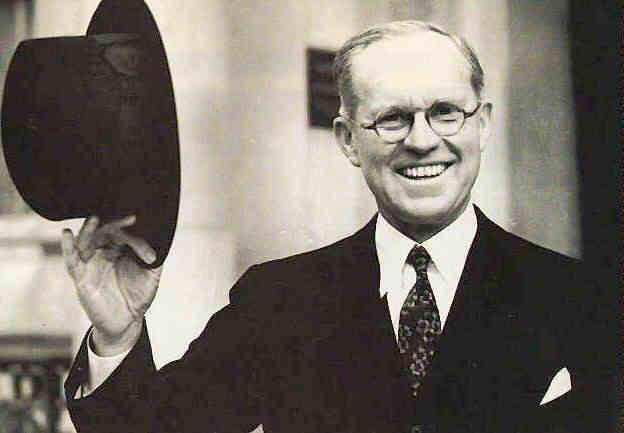
Joseph P. Kennedy, Sr.

Kirk Douglas

Larry Flynt

Margaret Thatcher


Mark Kirk
(an article about his stroke)

Mark McEwen
(an interview with him about his stroke)

Mary Kay Ash

Patricia Neal

Pope Benedict XVI

Ray Bradbury
Sharon Stone

Ted Williams
Tim Curry

Typhoid Mary


Jill Bolte Taylor (her famous TED talk)

Monday, September 21, 2015

Stroke Camp: it all started here

By Monica Vest Wheeler
Retreat & Refresh Stroke Camp Staff Volunteer

The roots for Retreat & Refresh Stroke Camp run deep, from a family that simply loved the outdoors  … and later sought solace through grief by creating a camp for kids with cystic fibrosis … to one outing in 2004 for people and new friends united by the challenge of stroke, which has evolved into 23 camps in 14 states this year.

It all started and continued at a church campground called Living Springs in Lewistown, IL, just under an hour from Peoria, a spiritual haven hidden behind corn and bean fields at the end of a dusty gravel road. And there was a seemingly endless forest of every type of tree imaginable, a secluded lake embraced by tall and short foliage, pockets of comfort to reflect, and spacious and fields to run and play until exhaustion sets in.

I discovered this family and this campground in June 2008 at my first Stroke Camp, an outing I expected to be a one-time venture as I was working on a book on coping with the everyday and emotional challenges of stroke. I came as a volunteer and observer … and left as a believer in the amazing power of this mission and this facility, a blessing of God's finest creation. And I kept coming back for more and more …

And I was there last weekend for what was scheduled to be our last Stroke Camp at this facility because Living Springs is being put up for sale, and its future is unknown. Stroke Camp WILL continue for our folks in Central Illinois in the fall, but where we do not know at this moment.

And I wept often as we packed up the Stroke Camp trailer and as I picked up the road signs for the last time. My tears are for "loss" of MY first camp site and at the same time for all the joy, beauty and friendships it gave me. This is where I knew what I was supposed to do with my life, where God whispered in my ear that I would work with stroke and brain injury survivors.

I don't know what the future holds for this sacred ground, but I do know Stroke Camp will continue to grow and change lives for the better no matter where we go in Central Illinois or anywhere in this great nation. And it all started here …


Monday, September 14, 2015

How Your Brain Rewires Itself After Injury

The following article was written by Clay Nichols, Co-founder of MoreSpeech and Bungalow Software which both provide Speech & Language Software. It was originally published in their free newsletter in August 2015. Clay has given me permission to re-post his article on our blog. 

Clay has spent the last 20 years helping patients, caregivers and speech pathologists with speech & language software. He's picked up a lot of tips and tricks along the way and he shares them in his free newsletter.

I encourage you to visit his site by clicking on this link: Speech & Language Therapy Software for stroke and brain-injury survivors . 

You can also click on the other two highlighted links above.

If you are interested in getting a free trial of any of the above software contact Clay using any of the above links. 

------------------------

by Clay Nichols

How Your Brain Rewires Itself After Injury
And why it means recovery is possible


At one point scientists believed the brain stopped growing new neural pathways as we grew older. While certainly the first years of childhood are developmentally dynamic, the latest research shows you can grow new pathways at any point in your life. If your brain has been injured by stroke or trauma, utilizing your brain's capacity for neuroplasticity through some basic, mindful exercises can compensate for injury and respond to new situations.

Welcome To Brainville 
Here’s an analogy that have used with caregivers and survivors over the last 20 years that many have found helpful: Your brain is like a city, with roads connecting all the little areas. We'll call it Brainville.

Those roads are analogous to the neural pathways in your brain. Your brain sends neural signals along these pathways. A very oversimplified example would be: if you are trying to say the word for a picture of an apple, your brain sends neural signals from the visual cortex (which sees the apple) to the speech cortex (which would move your mouth to make the speech for apple). The actual neurology is more complex than this, but you get the idea.


That’s analogous to cars driving in our little imaginary city, Brainville (population: 1 survivor). The cars are like neural signals traveling along neural roads from one part of of the city to another.

When you have a brain injury, it’s like part of the road system in Brainville has been damaged and the road (neural pathway) is closed.


Now you can’t get from home to the library because the route you normally take is damaged. Or your brain can't access the word for library. Or car. Or road, eat, or I love you.


But, just as you’d do on a real road, you can take a detour to get around the damaged streets in Brainville. The trick is that you have to learn the detour path. That’s what rehab is: accepting the challenge to learn a new path.

How Rehab Resources Will Help

  • In future newsletter articles I'll explain (in plain-english) the relatively new view of the brain and how rehab can work with it to produce positive therapeutic results.
  • I'll outline some exercises, and discuss the importance of mindful practice. I'll also bust the myth that all of the recovery happens in the first 3 to 6 months.
  • I'll also provide links to the research that both substantiates what I cover here and enables you to do your own homework. My goal is to give you the tools and information you need to make the right decision for yourself or your patient's therapy.

Resources Coming To You

Here are the future issues I have planned to help with Speech & Language recovery:

  1. Next Issue (in a week) : Busting Recovery Myths about Stroke and TBI.
  2. Video where an famous brain scientist describes what she thought about as she was having a stroke. You may not have seen this video, but over 3.3 Million other people have. 21,782 people gave this video a thumbs up!
  3. Where to find inexpensive Speech Therapy (often on a sliding scale where you pay what you can) from the most motivated Speech Therapists.
  4. Simple Self-Therapy tips for word-retrieval with a printable Infographic you can carry with you.
  5. Free therapy worksheets for:
    • Expressive Aphasia (word retrieval) : picture naming, etc.
    • Receptive Aphasia - Auditory Comprehension
    • Reading Comprehension
    • Oral-Motor exercises for Apraxia and more...
  6. A clever use of common office supply product for Expressive and Receptive Aphasia Recovery. You probably have lots of these at home (I know I do)
  7. Free Aphasia Card that explains the deficit the patient has and what the other person can do to help.
  8. Family board games that provide the best language practice.
  9. Understanding the different types of speech & language deficits
********************************************************************************